Conditions We See
Elbow & Wrist Pain
The joints behind every grip, turn and lift, and the two ways Mahle Chiropractic can work on them.
Chapter 01
When your grip stops cooperating
A sore elbow or a stiff wrist rarely announces itself with one bad moment. It shows up in the small stuff: turning a key in a cold lock, gripping a wrench under the sink, carrying a bag of mulch out to the truck, lifting a coffee mug one-handed without thinking about it. Then one day you notice you've started thinking about it.
Patients from New Castle and around Lawrence County tell us about the same handful of moments. Typing through a full shift and feeling it by the afternoon. A weekend of yard work that costs three days of a stiff forearm. A grip that used to be automatic and now needs a second thought before you close it around something heavy. If any of that sounds familiar, call (724) 656-9050 and talk it through with one of our doctors.
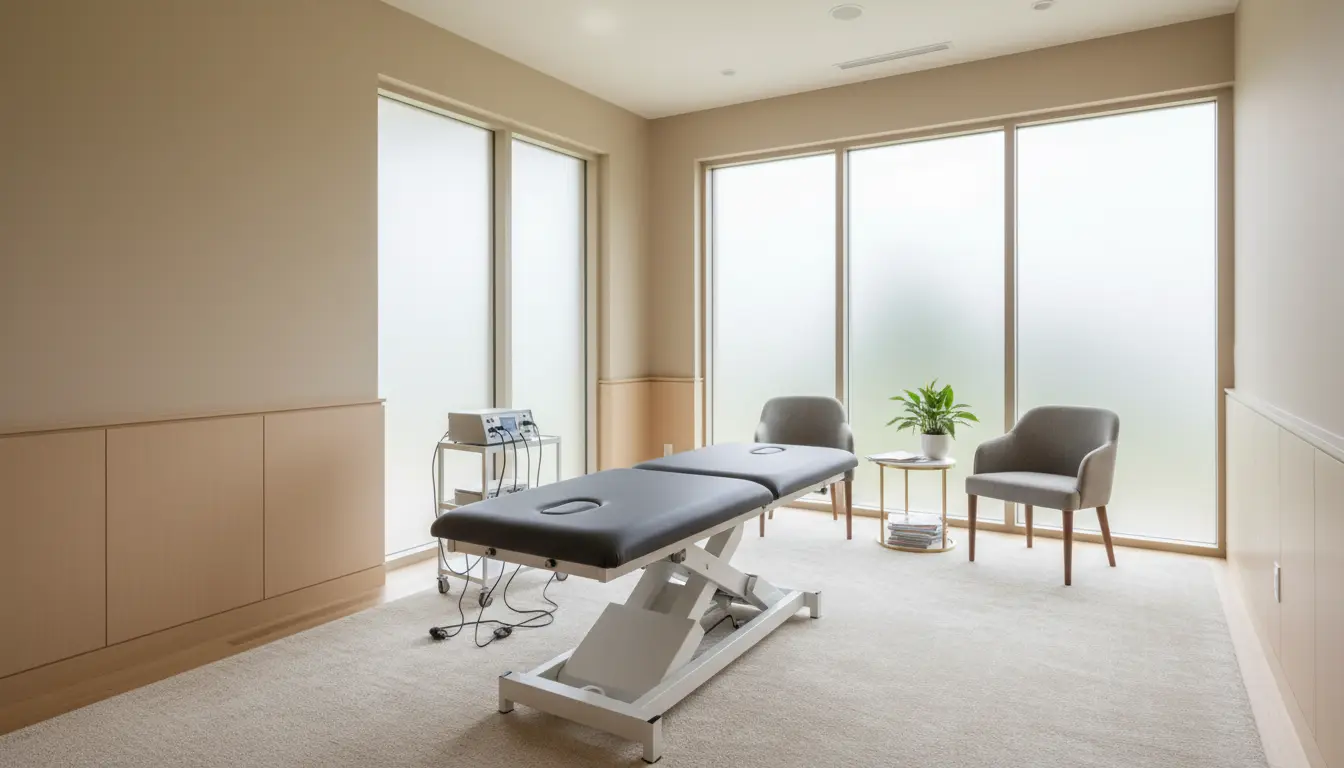
A clinical treatment room at Mahle Chiropractic in New Castle, with an equipment cart and lead wires ready beside the table.
Two ways to be adjusted, and why the small joints sometimes point to the second one
Every adjustment at Mahle Chiropractic starts with a choice between two approaches. Manual adjusting delivers a small, directed force at the angle of the joint to improve the motion it's lost. It's hands-on, and it's the technique most people picture when they think of a chiropractor.
Instrument adjusting works differently. It uses speed instead of force, a gentle tapping motion from a Sigma Instruments device rather than a hand-delivered thrust. The instrument reads the resistance or tightness in the joint first, so the doctor knows exactly where to adjust, and a computer compares the joint's movement before and after. For a joint as small as an elbow or a wrist, or for a patient who'd rather not be moved by hand, that's a genuinely useful option to have on the table. Which one you get is a conversation in the room, based on the joint, your comfort and your age, not a fixed routine.
Chapter 03
Therapy for the tissue around the joint, not just the joint itself
An adjustment restores motion to the joint. The therapies here work on what's built up around it. Ultrasound breaks up tightness in the muscle tissue and brings extra blood flow to a forearm or wrist that's been tense for weeks. Electric stimulation, run through pads or delivered by hand, helps the muscle contract in a natural way, which can improve range of motion, ease spasm, and support blood flow to the area.
Cupping is the third option, used to ease inflammation and increase circulation around a stubborn trigger point near the elbow or through the forearm. Which of the three you actually get, if any, comes down to what the doctor finds once you're in the chair.
Changing the way you do the task that keeps aggravating it
Part of what Mahle Chiropractic offers goes beyond the visit itself. The doctors talk with patients about managing and preventing pain over the long term without leaning on pain medication, including work on balance, flexibility and motion, and something that matters a lot for an elbow or a wrist specifically: changing the way you do a particular task. The grip on a tool, the angle you hold your phone at, the way you lift a box off a shelf. Small changes, but they're the ones that keep a joint from re-aggravating itself between visits.
At home, the standard advice is icing, heating and stretching to reduce the risk of strain, personalized in the office to what you actually do all day. Same day appointments are usually available, and Spanish speaking representatives are on staff if that's easier for your family. Call (724) 656-9050 to get on the schedule.
Mahle Chiropractic, 101 Decker Dr, New Castle. Three doctors, serving Lawrence County since 2000. Call (724) 656-9050.